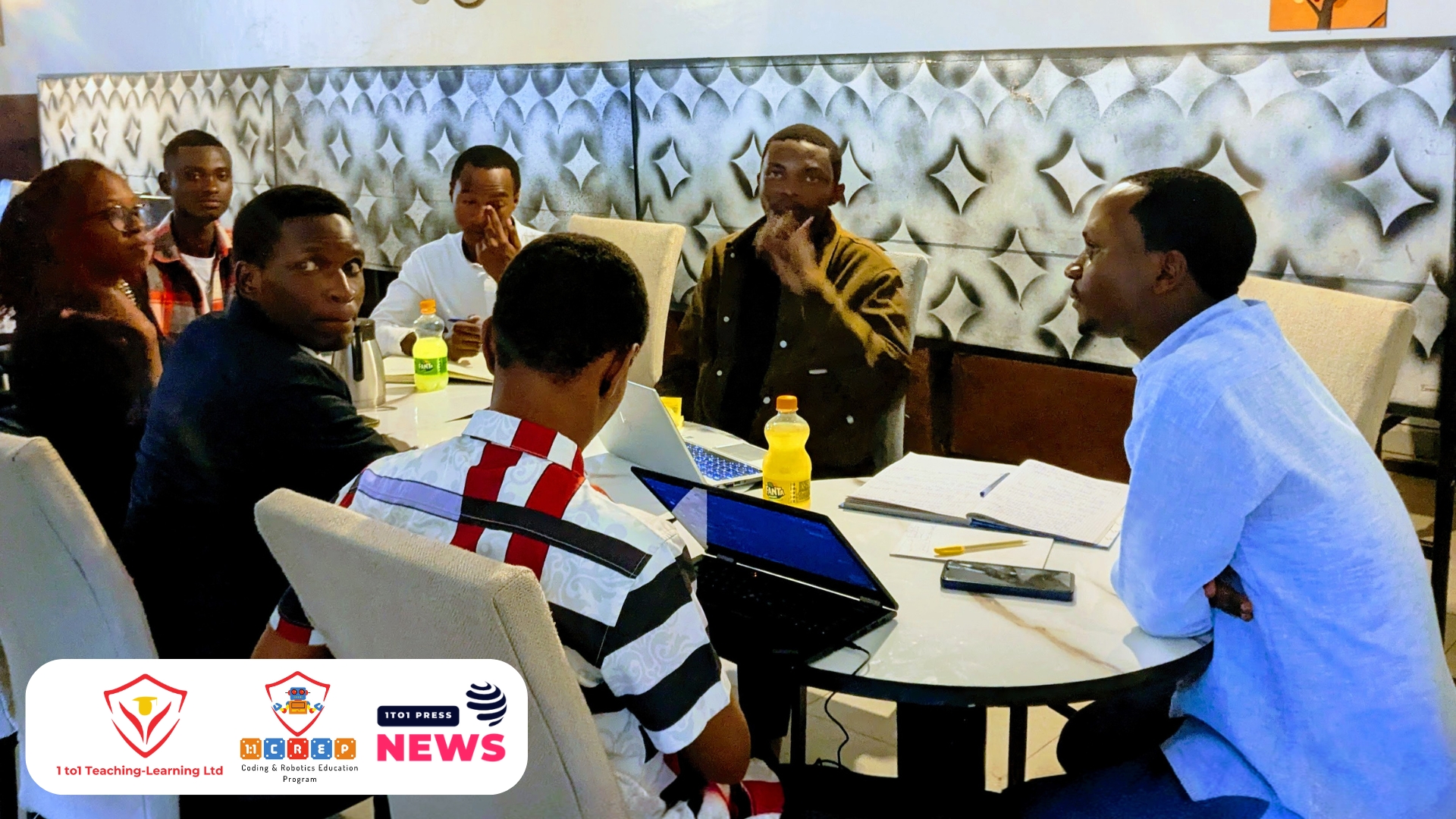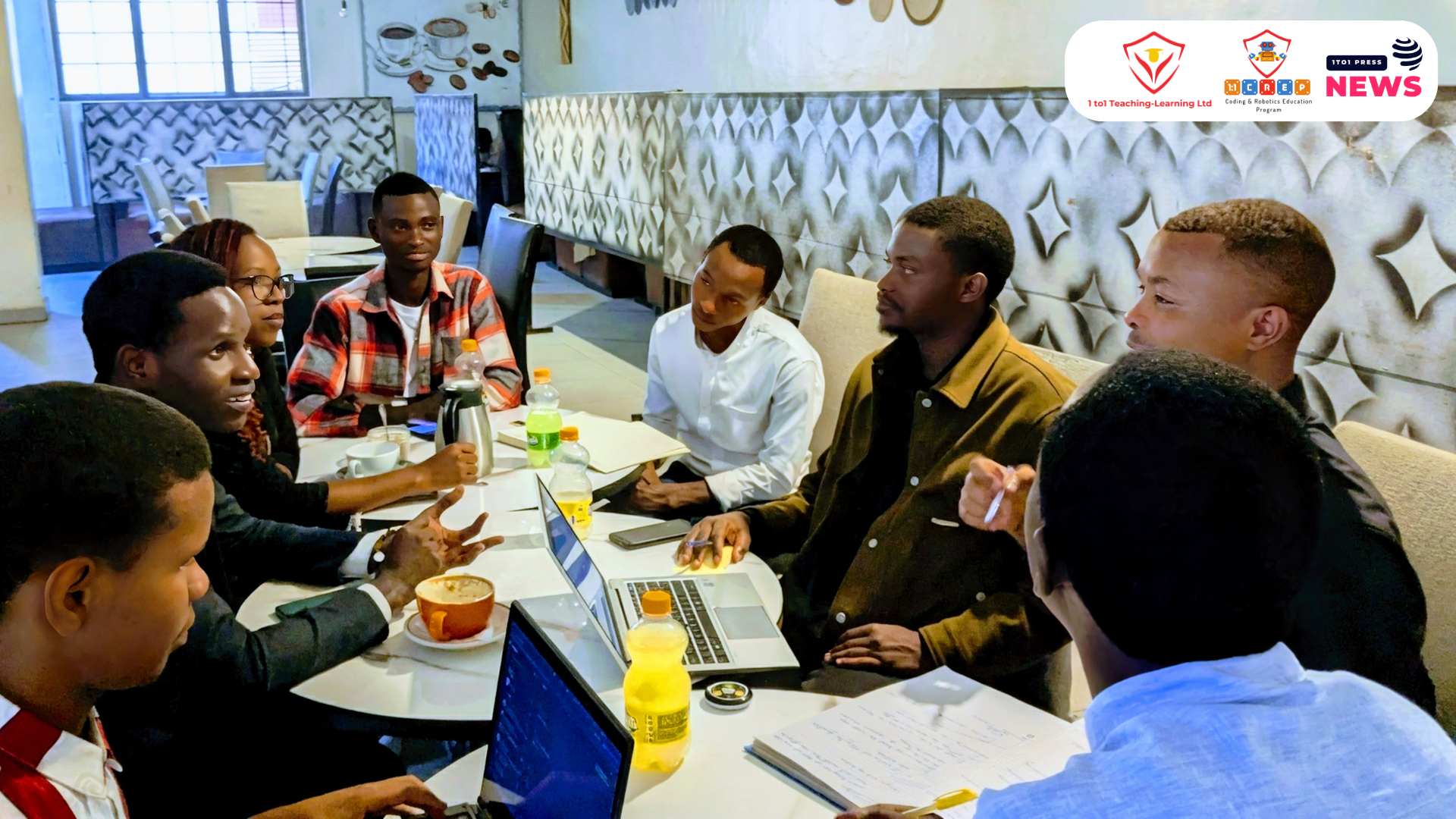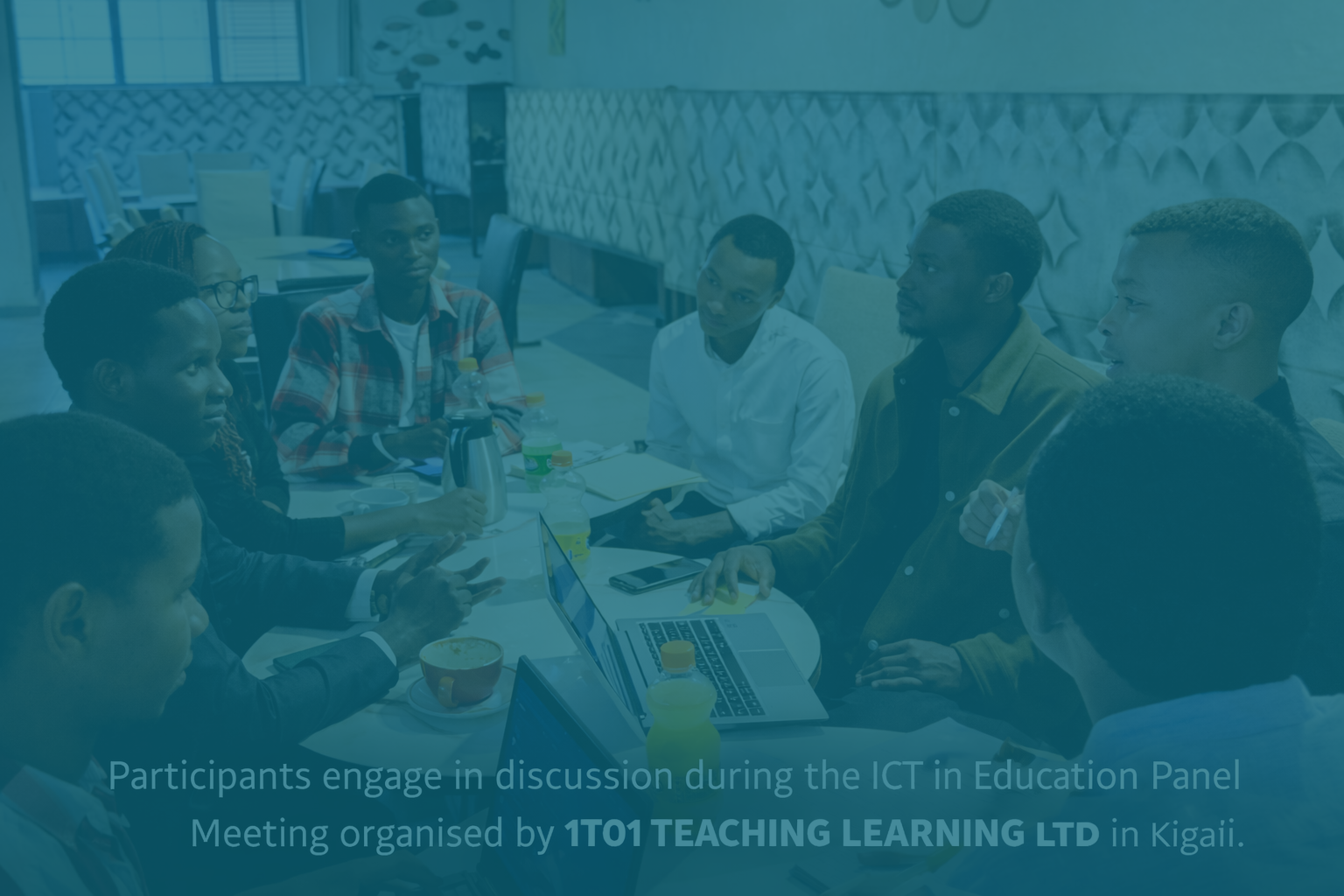
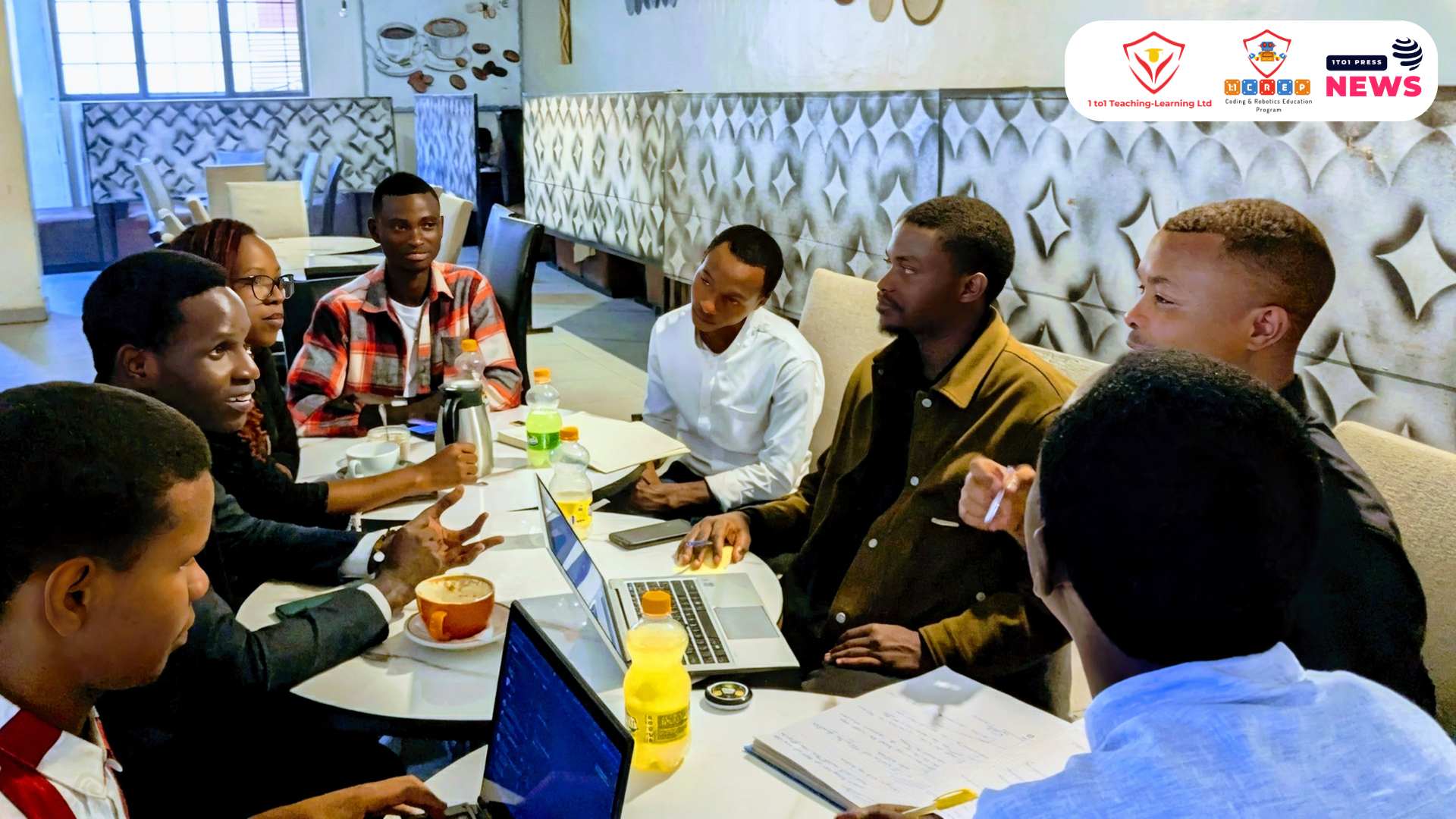
Kigali, Rwanda — A group of educators, software engineers, robotics specialists, and technology enthusiasts gathered for the first ICT in Education Panel Meeting organised by 1TO1 TEACHING LEARNING LTD, marking an important step toward strengthening digital learning and robotics education in Rwanda.
The face-to-face meeting brought together experts from different professional backgrounds to explore practical ways of integrating coding, robotics, and artificial intelligence into education, while aligning such initiatives with Rwanda’s long-term development ambitions.
The session was chaired by Habasa Ange Felix, Founder and Chairperson of 1TO1 TEACHING LEARNING LTD, and moderated by Ndatimana Emmanuel, Chief Learning Officer of the organisation.
Participants included:
Habasa Ange Felix – Founder & Chairperson, 1TO1 TEACHING LEARNING LTD
Ndatimana Emmanuel – Chief Learning Officer, 1TO1 TEACHING LEARNING LTD
Francois Audace Dei – Software & Robotics Engineer
Ramadhani Shafii Wanjenja – Software & Robotics Engineer
Hirwa Rukundo Hope – Software & Robotics Engineer and Founder & Lead Engineer at BYOSE Tech
Umutoni Seraphine – Illustrator
Tuyishimire Emmanuel – Tech Enthusiast
Tuyishime Onesphore – Operations Officer, Kimironko Office
The meeting served as a platform for exchanging ideas, identifying opportunities for collaboration, and outlining future actions that could strengthen ICT education and innovation within Rwanda’s learning ecosystem.
A Vision Rooted in Community Impact
During the opening session, the Chairperson explained the origins and philosophy behind 1TO1 TEACHING LEARNING LTD, highlighting that the initiative began as a small effort to support learners and communities through personalised education.
“1TO1 TEACHING LEARNING LTD started as a side initiative intended to give back to the community. Our focus is on individualised learning because we believe that the current system of mass education does not fully meet the needs of every learner.
Our vision promotes a One Instructor to One Learner approach, where teaching is personalised to support each student’s learning journey.
Although we are a small organisation, we believe that by combining efforts and collaborating with others, we can build something impactful and meaningful.
Our goal is not only to teach but also to develop sustainable learning systems that can improve education in the long term.”
The Chairperson emphasised that meaningful change in education often begins with collaborative efforts. By bringing together educators, technologists, and innovators, the organisation hopes to develop practical solutions that can benefit learners and communities.
Participants agreed that education systems today must evolve in order to keep pace with technological change.
Education in the Era of the Sixth Wave of Innovation
A major theme of the meeting was the need for education systems to respond to what many researchers describe as the Sixth Wave of Innovation.
Throughout modern history, technological progress has occurred in cycles or “waves.” Earlier waves were driven by major innovations such as steam engines, electricity, industrial manufacturing, and digital computing.
The current wave is characterised by technologies such as:
Artificial intelligence
Robotics and automation
Internet of Things (IoT)
Data-driven systems
Digital platforms and intelligent machines
These technologies are transforming economies, industries, and societies across the world.
Participants noted that preparing learners for this new era requires more than traditional academic instruction. Instead, education must focus on creativity, problem-solving, and technological literacy.
For Rwanda, investing in ICT education is therefore not simply an educational reform—it is part of preparing the country for the future of work and innovation.
Building a Robotics and Coding Learning Pathway
One of the central discussions during the meeting focused on the development of a structured robotics and coding curriculum that can be implemented across different levels of education.
Panel members proposed a progressive model where technological learning begins early and gradually becomes more advanced.
At the nursery and early childhood level, learning would focus on creativity and problem-solving through play-based activities. Simple puzzles, shapes, and building exercises can help children develop logical thinking skills.
At the primary school level, learners can begin exploring block-based programming and beginner robotics tools. Through simple projects, they can learn how instructions control machines and systems.
At the secondary school level, learners can advance to more complex concepts such as electronics, sensors, and microcontrollers. This stage would allow students to design projects that simulate real-life technological solutions.
Finally, at the university level, learners could focus on engineering-level robotics development, research, and innovation projects that address real community challenges.
Participants agreed that such a structured pathway could help learners progress from basic computational thinking to advanced technological innovation.
Artificial Intelligence as a Learning Tool
Artificial intelligence was another key topic discussed during the meeting.
Panel members observed that AI is rapidly becoming part of everyday life, influencing sectors such as healthcare, agriculture, finance, transportation, and education.
Rather than ignoring this reality, the panel suggested that learners should be taught how to use AI responsibly as a learning and problem-solving tool.
Introducing AI awareness in education could allow students to:
accelerate their learning process
explore new ideas and solutions
develop innovative projects
better understand how intelligent systems work
Participants stressed that AI should complement human creativity rather than replace it.
Supporting Rwanda’s Vision 2050 and NST2
The discussions held during the meeting strongly align with Rwanda’s broader national development agenda.
Through Vision 2050, Rwanda aims to build a knowledge-based economy powered by innovation, technology, and skilled human capital.
Similarly, the National Strategy for Transformation (NST2) prioritises digital transformation, technological advancement, and improved education systems as key drivers of sustainable development.
Panel members agreed that initiatives promoting robotics, coding, and digital skills education directly support these national goals.
By equipping young people with practical technological competencies, Rwanda can strengthen its capacity to participate in the global digital economy.
Ensuring Technology Education Is Inclusive
An important issue raised during the discussions was the importance of ensuring that technology education remains inclusive and accessible to all learners.
Participants emphasised that learners with disabilities should also benefit from robotics and digital learning opportunities.
Suggestions included:
integrating sign language interpretation into educational videos
using subtitles and multimedia learning tools
designing tactile learning materials for visually impaired learners
encouraging collaborative teamwork among students
The panel emphasised that inclusive design must be considered from the beginning when developing educational technologies.
Empowering Teachers through Training
Another challenge identified during the meeting was the limited exposure many teachers currently have to robotics and coding instruction.
Although some curricula include introductory programming topics such as Scratch, many teachers feel insufficiently prepared to deliver practical lessons.
To address this gap, the panel proposed launching Training of Trainers programmes for science and ICT teachers.
Such programmes could equip educators with practical knowledge on:
robotics tools and kits
coding instruction techniques
project-based learning approaches
integrating technology into everyday teaching
Empowering teachers would allow ICT education initiatives to reach far more learners across different schools.
Exploring Affordable Robotics Solutions
Participants also discussed the need for robotics tools that are affordable and practical for schools.
While some robotics kits such as LEGO-based systems are easy for beginners to use, they can be expensive for many schools.
Others suggested using Arduino-based robotics kits, which are more affordable and flexible but require careful supervision.
The panel also explored the idea of developing locally designed robotics kits that could be adapted to Rwanda’s educational context.
Such innovation could reduce costs and support local technological development.
Collaboration as the Way Forward
As the meeting concluded, participants agreed that collaboration will be essential for turning ideas into practical results.
Through partnerships between educators, engineers, institutions, and technology communities, Rwanda can strengthen its ICT education ecosystem.
The panel also committed to continue working together to develop curriculum frameworks, pilot programmes, and partnerships that can help expand robotics and coding education.
For 1TO1 TEACHING LEARNING LTD, the meeting represented not just a discussion but the beginning of a broader journey toward transforming how technology is integrated into learning.
Preparing Rwanda’s Learners for the Future
The world is entering a new technological era shaped by artificial intelligence, robotics, and digital innovation.
For Rwanda, preparing learners to participate in this transformation is both an opportunity and a responsibility.
Initiatives like the ICT in Education Panel Meeting organised by 1TO1 TEACHING LEARNING LTD demonstrate how collaboration and innovation can contribute to building a stronger education system.
By investing in digital skills, empowering teachers, and encouraging innovation among learners, Rwanda can continue positioning itself as a forward-looking nation ready to embrace the future.
As participants agreed during the meeting, the goal is not simply to teach technology but to empower the next generation to create solutions that will shape tomorrow’s world.